Here’s a test I want you to run right now. Open ChatGPT. Paste in the URL of your most important service page. Ask it: “Summarize what this company does based on this page.”
Read the response carefully. Is it accurate? Does it capture your key differentiators? Does it mention your target audience correctly? Or does it spit out something generic that could describe any competitor?
If the summary misses the mark, your content has a structural problem and it’s costing you visibility in the AI-driven search landscape.
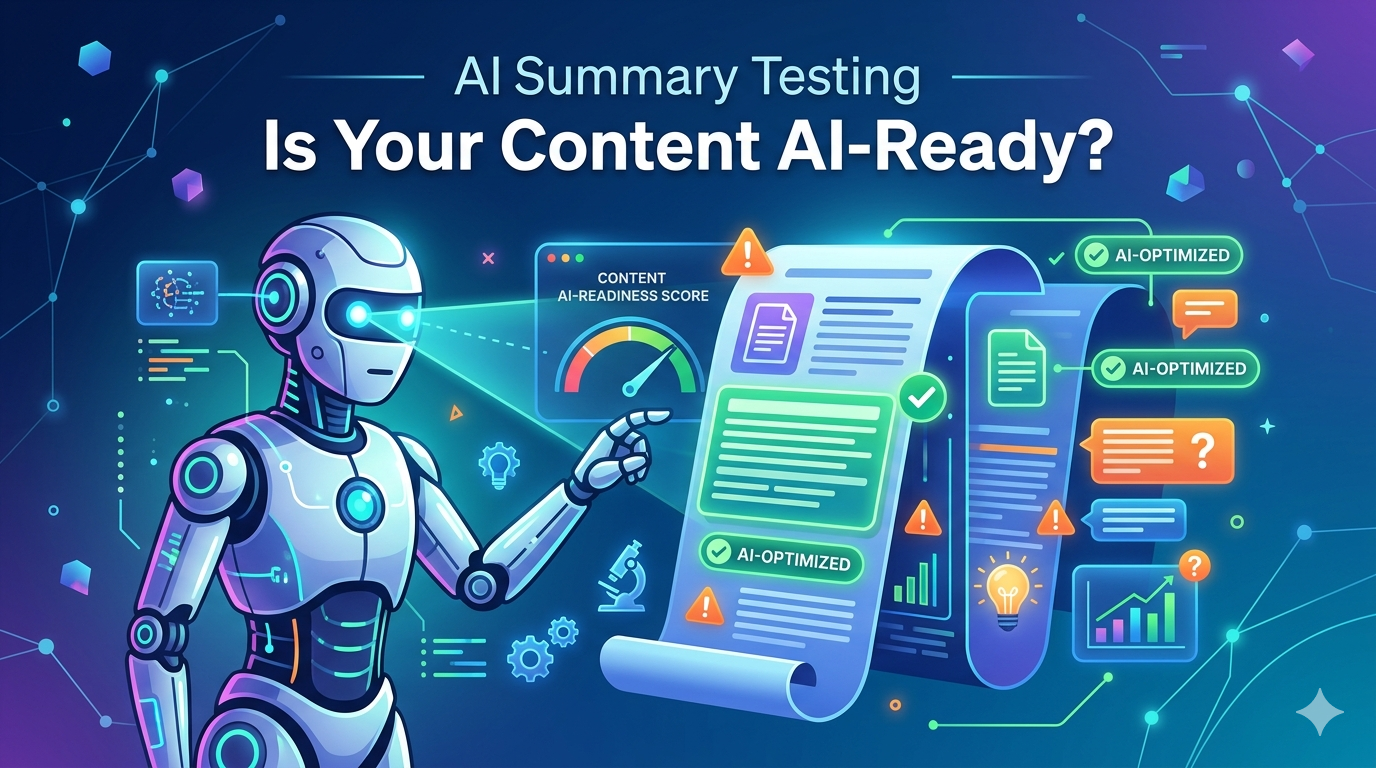
This is what we call AI Summary Testing, and it’s become one of the most valuable QA steps in our content process at Prism Digital Media.
The concept is simple: if an AI platform can’t accurately summarize your content, it can’t accurately recommend you. And in 2026, AI recommendations are becoming a primary discovery channel for businesses across every industry.
I started doing this after noticing something with a healthcare client. Their service page ranked well on Google position 3 for a competitive keyword. But when I asked ChatGPT about the type of service they offered, it cited a competitor instead. Not because the competitor ranked higher, but because their content was structured in a way that was easier for the AI to parse and understand.
That was a wake-up call.
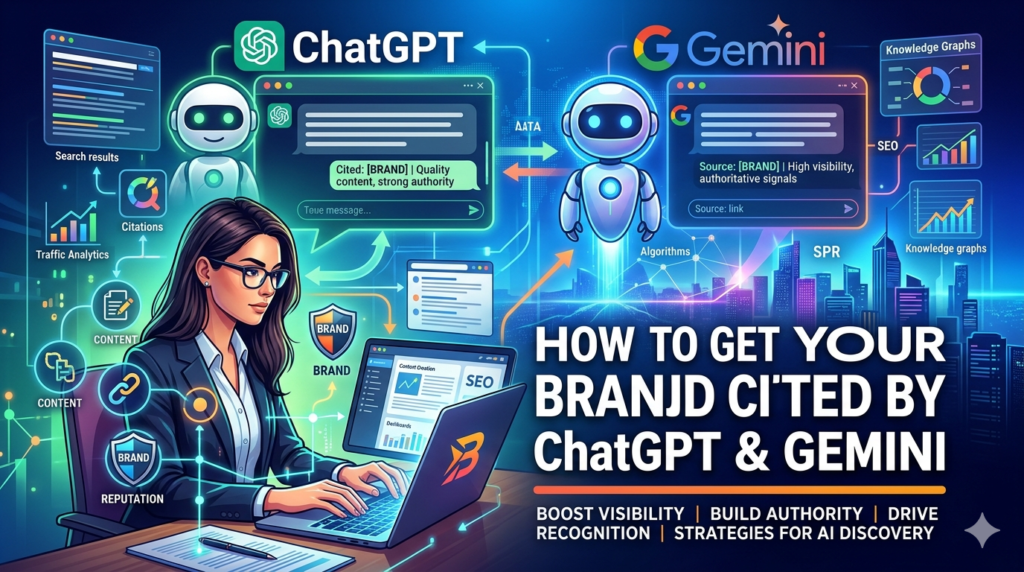
So we developed a process. After publishing or updating any important page, we run it through three AI platforms ChatGPT, Gemini, and Perplexity. We ask each one to summarize the page, describe the company, and explain what makes them different.
Then we compare the AI’s interpretation with what we intended to communicate. The gaps between intention and interpretation tell us exactly what needs fixing.
Common problems we find:
Vague positioning. If your page says “we provide innovative solutions for modern businesses,” the AI has nothing concrete to latch onto. It needs specifics: who you serve, what problem you solve, what outcome you deliver.
Buried key information. Sometimes the most important details, your specialization, your geographic focus, your ideal client are buried in the third paragraph or hidden in a sidebar. AI platforms weigh the early content of a page more heavily. If your first 200 words are fluff, that’s what gets summarized.
Missing entity relationships. If your content doesn’t clearly connect your brand to your industry, your service category, and your audience, the AI struggles to categorize you. Think of it like this: Google uses links to understand relationships between entities. AI uses clear, explicit statements.
Conflicting signals. If your About page says one thing and your service page says another, the AI gets confused and might default to a competitor whose messaging is more consistent.
Here’s how to fix it:
Lead with your value proposition. The first paragraph of every key page should state who you are, what you do, and who you serve. No cleverness. No metaphors. Direct and clear.
Use structured headings that mirror natural questions. Instead of “Our Approach,” try “How We Help B2B Manufacturers Increase Organic Leads.” The AI can parse this as a direct answer to a user’s query.
Add an FAQ section at the bottom of every important page. These should address the 5-7 most common questions about your service. Write answers that are 2-3 sentences long enough to be useful, short enough to be cited.
Implement schema markup. This gives AI platforms machine-readable context about your content. FAQ schema, Organization schema, Service schema these help AI engines understand your content without guessing.
Re-test after every update. This isn’t a set-and-forget thing. AI models evolve, and so should your content.
The whole process takes about 30 minutes per page. That’s 30 minutes that could be the difference between being recommended and being ignored.
We’ve built this into our standard content workflow at Prism. Every piece of content we create goes through AI summary testing before we consider it done. It’s changed how we write, how we structure, and honestly, how we think about content strategy altogether.
If you want us to run an AI readiness test on your top pages, reach out. We’ll show you exactly how AI platforms see your brand today and what needs to change.