If you’ve been doing SEO for any amount of time, you’ve probably noticed something weird happening over the last year or so. Traffic from some of your best-performing pages has dipped not because you lost rankings, but because Google started answering the question right there on the results page. AI Overviews. Featured snippets on steroids. And suddenly, your perfectly optimized blog post is getting impressions but fewer clicks.
That’s where GEO comes in. And no, it’s not some buzzword cooked up by a marketing guru on LinkedIn. It’s a real shift in how people discover brands online.
Let me break this down simply.
SEO is what most of us know to optimize your website so Google ranks it higher for relevant searches. Keywords, backlinks, technical health, content depth. It still matters. A lot, actually. I’ve spent over 8 years doing this across B2B, SaaS, ecommerce, healthcare you name it. SEO isn’t going anywhere.
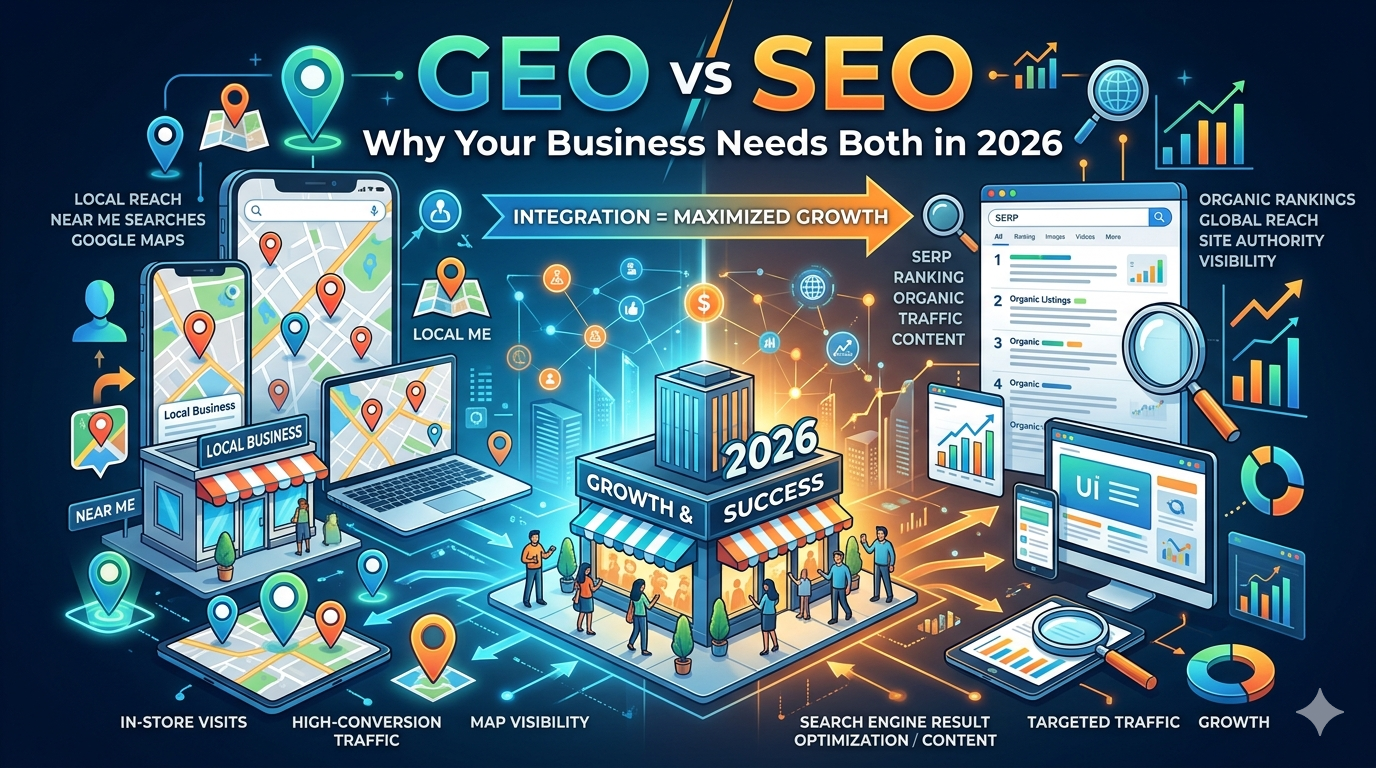
But GEO Generative Engine Optimization is about making sure AI platforms like ChatGPT, Gemini, Perplexity, and even Google’s own AI Overviews actually cite and recommend your brand when someone asks a question.
Here’s the thing people miss: when someone types “best SEO agency for manufacturing companies” into ChatGPT, the AI doesn’t crawl Google in real time (usually). It pulls from its training data, from web content it’s indexed, from structured information it trusts. If your brand isn’t showing up in those AI responses, you’re invisible to a growing chunk of your potential customers.
So how do the two work together?
Think of SEO as the foundation. Your site needs to be technically sound, your content needs depth and authority, and your backlink profile needs to show Google you’re credible. None of that changes.
GEO adds a layer on top. It’s about structuring your content so AI engines can parse it, cite it, and recommend it. That means clear entity definitions who you are, what you do, who you serve. It means FAQ sections with direct, definitive answers. It means using schema markup so machines understand your content as well as humans do.
I ran a test with one of our clients last quarter. We took their top-performing service page, rewrote the structure to include clearer entity relationships, added FAQ schema, and made the language more “citeable” short, authoritative statements that an AI would feel confident recommending. Within 6 weeks, that page started appearing in Perplexity results for related queries. No new backlinks, no new content. Just structural optimization.
The practical difference is this: SEO gets you ranked. GEO gets you recommended. And in 2026, being recommended by AI is becoming just as valuable as ranking on page one.
Here’s what I’d suggest if you’re starting from scratch:
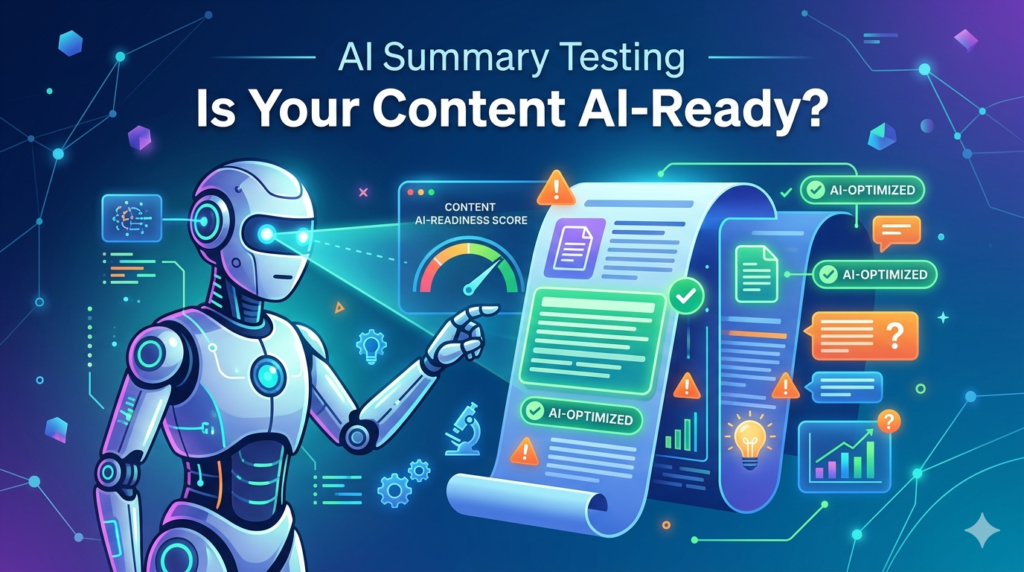
First, audit your existing content for AI readiness. Paste your top pages into ChatGPT and ask it to summarize them. If the summary is inaccurate or misses your key message, your content structure needs work.
Second, make sure your brand entity is clear across the web. Your About page, your Google Business Profile, your LinkedIn, industry directories should all tell a consistent story about who you are and what you specialize in.
Third, don’t abandon your SEO fundamentals. Topical authority, internal linking, page speed, mobile experience these still feed into how AI platforms evaluate trust. Google’s AI Overview pulls from top-ranking pages. If you’re not ranking, you’re probably not getting cited either.
The brands that win in 2026 won’t be the ones that chose between SEO and GEO. They’ll be the ones that realized these are two sides of the same coin and built their strategy accordingly.
At Prism Digital Media, this is exactly how we approach visibility for our clients. We don’t treat SEO and GEO as separate line items. They’re baked into one unified strategy because that’s how search actually works now.
If you’re not sure where your brand stands with AI visibility, let’s talk. We run a free AI citation audit that shows you exactly how ChatGPT, Gemini, and Perplexity perceive your brand today.