I’m going to be honest when clients first started asking me “how do we show up in ChatGPT?” about a year ago, I didn’t have a great answer. None of us did. There was no playbook. No Moz guide. No Ahrefs study.
So we did what any curious SEO team would do. We tested. A lot.
We took 12 client brands across different industries B2B manufacturing, SaaS, healthcare, ecommerce and systematically tracked whether and how AI platforms were mentioning them. Then we started making changes and tracking what moved the needle.
Here’s what we learned.
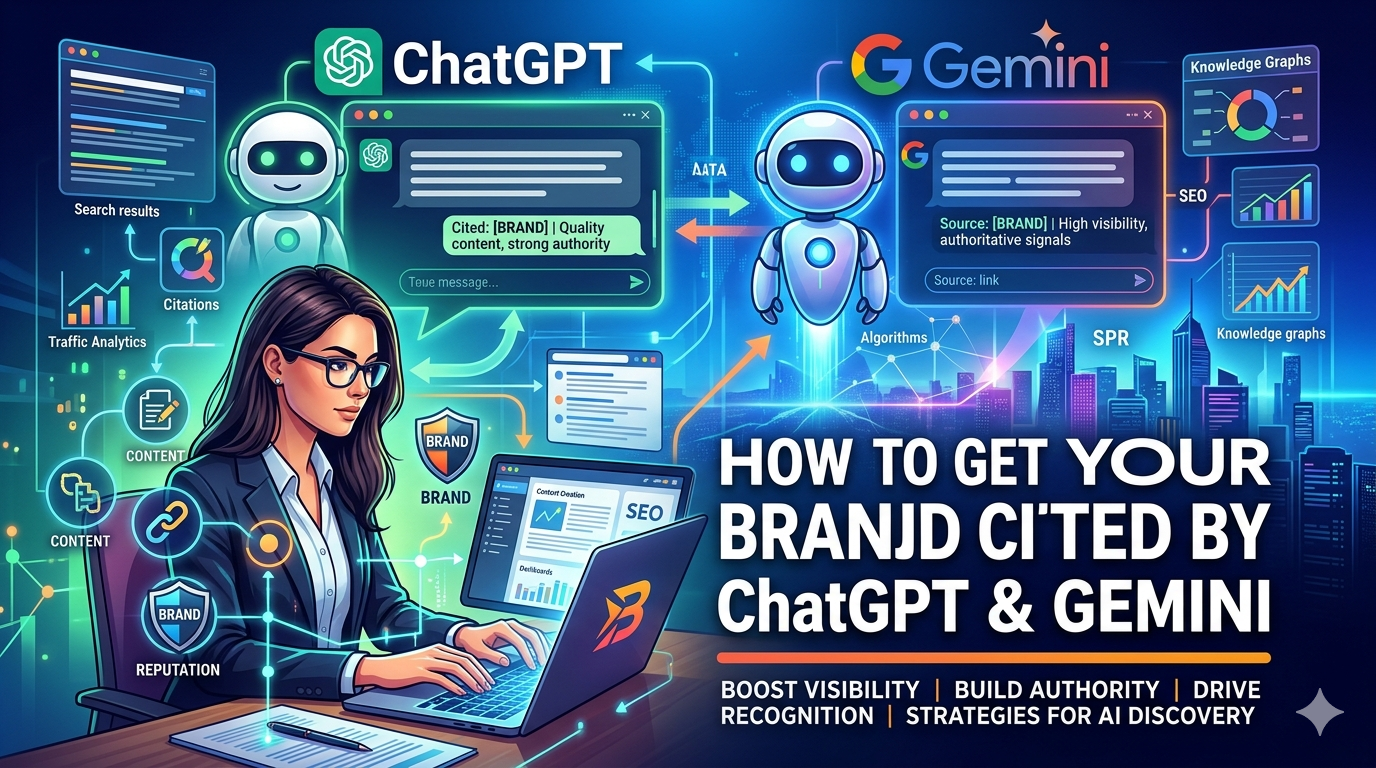
AI platforms don’t cite brands randomly. They cite brands that meet three criteria: they’re mentioned frequently across trusted sources, their information is consistent everywhere, and their content provides clear, authoritative answers that the AI can confidently relay.
Let’s unpack each one.
Frequency across trusted sources means your brand needs to exist beyond just your website. Think industry publications, directories, review platforms, forums, and social media profiles. When ChatGPT tries to answer “what’s a good SEO agency for B2B companies,” it’s drawing from a wide net. If your brand only exists on your own website and maybe a LinkedIn page, you’re essentially invisible to the model.
We saw a clear pattern: brands that had mentions across 15+ external sources were significantly more likely to appear in AI responses than brands that only had 3-4 external mentions.
Consistency is the second piece. If your website says you’re a “digital marketing agency” but your LinkedIn says “growth consultancy” and your Google Business Profile says “advertising agency,” you’re confusing the AI. These models look for entity consistency. Your name, your description, your specializations they need to match across every platform.
This sounds basic, but you’d be surprised how many companies have mismatched profiles. We audited one client and found 7 different descriptions of their business across various platforms. We standardized everything, and within two months, their brand started appearing in Gemini responses for their target category.
The third factor: clear, authoritative content is where your on-site strategy comes in. AI platforms prefer content that makes direct, confident statements. Not “some experts believe that maybe in certain cases, this approach could potentially work.” Instead: “This approach works for B2B companies because it addresses the three core challenges in their sales cycle.”
Definitive. Citeable. Structured.
Here’s the practical framework we use at Prism:
Step one: Brand entity audit. We map every place your brand appears online and check for consistency. Name, description, services, location everything needs to align.
Step two: External presence building. Not link building in the traditional sense (though that helps too). This is about being genuinely present in your industry ecosystem. Guest contributions on industry blogs, participation in relevant forums, directory listings, podcast appearances, being quoted in articles. The goal is to create a web of mentions that AI platforms can draw from.
Step three: Content restructuring. We rewrite key pages to be AI-friendly. That means adding FAQ sections with direct answers, using clear heading hierarchies, implementing schema markup, and writing in a way that an AI would feel comfortable quoting.
Step four: Testing. After every round of changes, we manually test how AI platforms respond to queries related to the client’s industry. We track what gets cited, what doesn’t, and adjust.
One thing I want to be clear about is that this isn’t a one-time project. Just like SEO, GEO requires ongoing work. AI models get retrained. New competitors enter the conversation. Your content needs to stay fresh and authoritative.
But the payoff is real. One of our B2B clients went from zero AI citations to being recommended by ChatGPT for 4 out of 7 target queries within 3 months of implementing this framework. That translated to inbound leads from people who said “ChatGPT recommended you.”
That’s the new referral channel. And if you’re not optimizing for it, someone in your industry is.