I’m going to share a number that changed how we approach content strategy for every client.
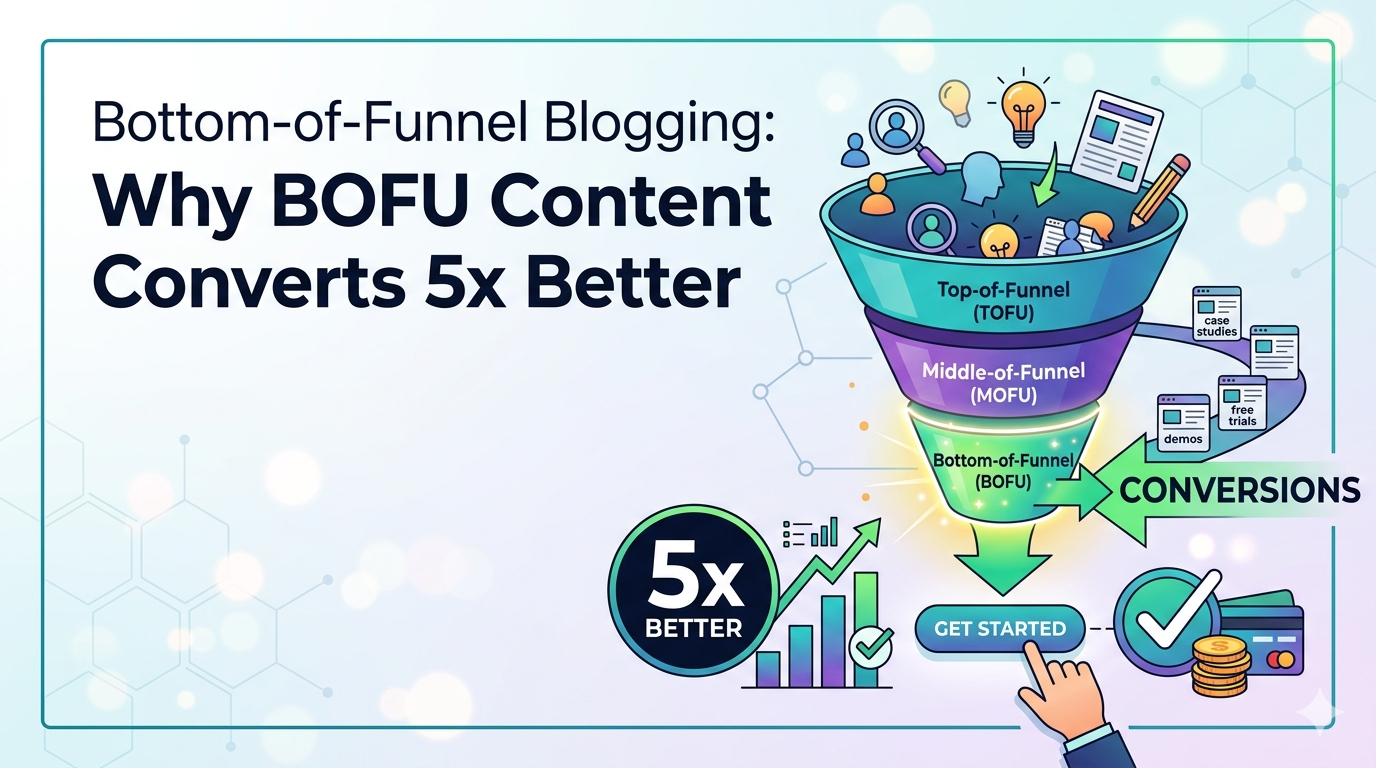
We ran the data across 8 client accounts over a 6-month period. Blog posts targeting top-of-funnel keywords like “what is SEO” or “benefits of content marketing” had an average conversion rate of 0.3%. Blog posts targeting bottom-of-funnel keywords such as “best SEO agency for ecommerce” or “HubSpot vs Salesforce for small teams” converted at 1.8%.
That’s a 5-6x difference. On the same websites. With the same contact forms. The only variable was the intent behind the keyword.
This isn’t surprising if you think about it from the user’s perspective. Someone searching “what is content marketing” is learning. They’re probably not going to hire an agency today. But someone searching “content marketing agency pricing” is evaluating vendors. They’re in buying mode.
The problem is that most content strategies are still built around TOFU content because that’s where the search volume is. “What is SEO” gets 50,000 searches a month. “SEO agency for B2B manufacturers” might get 200. So everyone writes the high-volume article and ignores the high-intent one.
But 200 visits at 1.8% conversion is 3-4 leads. 50,000 visits at 0.3% is 150 leads sure, more in absolute numbers, but at a massively higher content and competition cost. And those TOFU leads are often lower quality because the person wasn’t looking for a solution when they found you.
Here’s what BOFU content looks like in practice:
Comparison posts. “Tool A vs Tool B” or “Agency A vs Agency B.” These are the kinds of searches people do right before making a purchase decision. They’ve already narrowed their options and they want help choosing. If you create honest, detailed comparison content, you capture people at the exact moment they’re deciding.
Alternative posts. “Best alternatives to [Competitor].” Someone searching this is unhappy with their current solution and actively looking to switch. That’s about as high-intent as it gets.
Pricing and cost content. “How much does SEO cost in India” or “average monthly retainer for content marketing.” People asking about pricing are serious buyers. They’re past the education phase and into the budgeting phase.
“Best of” and listicles with intent. Not “10 tips for better social media” that’s TOFU. More like “7 best SEO agencies for healthcare companies.” The person searching this is looking for a provider. If you’re on that list (or you wrote it with honest recommendations including yourself), you’re in the consideration set.
Process and methodology content. “What to expect from an SEO audit” or “how we approach B2B content strategy.” These attract people who are evaluating how agencies work. They’ve already decided they need help now they’re figuring out who does it the way they want.
Case studies. These are conversion content, period. When someone reads your case study about how you increased a similar company’s leads by 200%, they’re imagining those results for themselves. Put your case studies front and center and make sure they’re discoverable via search.
My recommendation: flip your content ratio. Most companies do 80% TOFU and 20% BOFU. Try 40% TOFU, 40% MOFU, 20% BOFU or even heavier on BOFU if you’re a service business where every qualified lead matters.
The TOFU content isn’t useless, it builds topical authority and brand awareness, which supports your BOFU content. But if you had to choose where to spend your limited content budget, BOFU will generate revenue faster.
At Prism, the first 8-10 blog posts we create for any new client are almost always BOFU. We want the conversion infrastructure in place before we invest in top-of-funnel traffic. It’s the difference between building a store before you hang the sign, versus hanging a sign over an empty lot.