B2B SEO is a different animal. Anyone who’s tried to apply B2C tactics to a B2B company knows that the search volumes are lower, the sales cycles are longer, the decision-making involves multiple stakeholders, and the content that converts looks nothing like a lifestyle blog post.
I’ve worked with B2B companies across manufacturing, SaaS, professional services, and industrial automation. And the biggest mistake I see is companies treating SEO as a traffic game. In B2B, traffic is a vanity metric. Leads are the only metric that matters.
Here’s the framework we use at Prism Digital Media. It’s been refined over 8+ years of doing this, and it works.
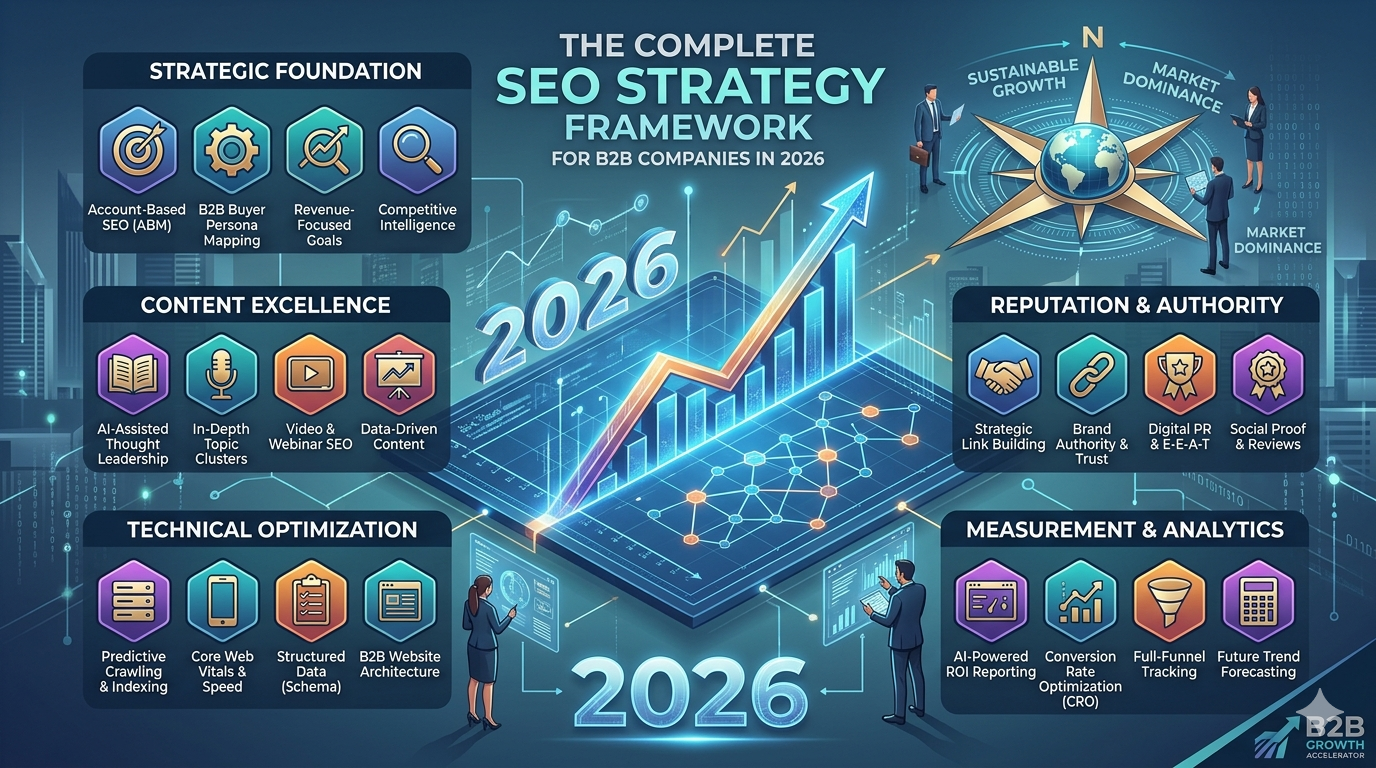
Phase 1: Strategic foundation. Before we write a single word of content or touch a single technical issue, we need to understand three things: who’s the ideal customer, what’s their search journey, and where are the gaps in the current landscape.
For B2B, the search journey typically looks like this: problem awareness (searching for symptoms), solution research (searching for approaches), vendor evaluation (searching for specific solutions), and decision validation (searching for reviews, comparisons, case studies). Most B2B companies only create content for the middle of this journey. They have service pages but nothing for the awareness or validation stages.
We map out the full journey and identify content gaps at every stage. This gives us a content plan that covers the entire buyer journey, not just the parts the company is comfortable talking about.
Phase 2: Technical foundation. I know this isn’t the sexy part, but it’s essential. We’ve audited B2B sites where indexing issues alone were costing them 30-40% of potential organic traffic. Pages blocked by robots.txt that shouldn’t be. Duplicate content from parameter URLs. Crawl budget wasted on low-value pages. Site speed issues that cause Google to crawl less of the site.
For B2B specifically, we pay extra attention to international SEO setup (many B2B companies serve multiple regions), faceted navigation on product catalogs, and proper handling of technical documentation and PDF content.
Phase 3: Content ecosystem. This is where most of the magic happens. We don’t create isolated blog posts. We build topic clusters interconnected groups of content that establish topical authority around a core theme.
For a B2B manufacturing client, a topic cluster might look like this: pillar page about “food processing automation,” supported by blog posts about specific technologies, comparison articles, ROI frameworks, case studies, and FAQ content. Each piece links to the others, creating a web of relevance that Google and AI platforms both reward.
The key insight that most B2B companies miss: your content doesn’t need to be fancy. It needs to be useful. B2B buyers want data, specifics, technical details, and proof. They want to see that you understand their problems at a technical level. A well-structured technical blog post with real data will outperform a polished thought piece every time.
Phase 4: Authority building. In B2B, authority isn’t just about backlinks (though those help). It’s about being recognized as a credible entity in your industry. That means getting mentioned in industry publications, participating in relevant forums and communities, maintaining updated and accurate business profiles, and having your experts quoted in relevant content.
For one client in the industrial automation space, we focused on getting their engineering team to contribute insights to industry publications. This wasn’t a link-building exercise, it was an authority-building exercise. The backlinks were a byproduct. The real value was that Google and AI platforms started recognizing the company as an authority in their niche.
Phase 5: Conversion optimization. All the traffic in the world means nothing if your site doesn’t convert visitors into leads. For B2B, this means clear calls-to-action on every page, contact forms that aren’t buried, case studies that prove results, and a site experience that instills confidence.
We’ve found that the single highest-converting page type for B2B companies is the “our process” page, a detailed walkthrough of what it’s like to work with you. It answers the buyer’s anxiety about what happens after they reach out, and it differentiates you from competitors who just have a generic contact form.
Phase 6: Measurement that matters. We track three metrics above all else: qualified leads generated from organic search, pipeline value influenced by organic content, and organic visibility for high-intent keywords. We also track traditional metrics like rankings and traffic, but these are leading indicators, not success metrics.
This framework isn’t revolutionary, it’s practical. And that’s the point. B2B SEO doesn’t need to be revolutionary. It needs systematic, consistent execution over time. The companies that commit to this process for 12+ months see compounding results that become almost impossible for competitors to replicate.