I pulled up a client’s Search Console data last month and something jumped out. Impressions were up 22% year over year. Clicks were down 8%. Their average position hadn’t changed much. So what happened?
Zero-click searches happened.
Google is answering more and more queries directly on the results page. AI Overviews, featured snippets, knowledge panels, People Also Ask boxes all serve the same purpose: keeping users on Google instead of sending them to your website.
For some SEO folks, this is an existential crisis. I think it’s just an evolution, and honestly, not even the scariest one we’ve faced.
Here’s how I think about it: zero-click searches don’t eliminate value. They redistribute it. The value of being visible shifts from direct traffic to brand awareness, trust building, and influence on the user’s next action.
Let me explain with a real scenario. Someone searches “how to improve B2B lead quality.” Google shows an AI Overview that mentions three strategies, citing three different sources. One of those sources is your blog post. The user reads the AI Overview, gets their answer, and doesn’t click through. Zero-click.
But now they’ve seen your brand name associated with B2B lead quality. The next time they search for something more specific, say, “B2B lead generation agency” they recognize your brand. They click. They convert.
This is the zero-click reality: you might not get the click on the informational query, but you’re building the brand recognition that drives the commercial click later.
So how do you win in this environment?
First, accept that not all content is meant to drive clicks anymore. Some content exists to build topical authority and brand visibility. If your blog post gets cited in an AI Overview and your brand gets seen by 10,000 people, that has value even if only 200 of them click through.
This means you need to rethink how you measure content performance. Impressions and brand search volume become important KPIs alongside clicks and conversions. If your informational content is growing impressions and your branded search is growing alongside it, the system is working.
Second, invest heavily in content that zero-click can’t satisfy. Product comparisons, detailed reviews, interactive tools, ROI calculators, case studies with specific data, video walkthroughs are the things people need to visit your site to consume. No AI Overview is going to replicate your case study showing how you helped a manufacturing client increase leads by 180%.
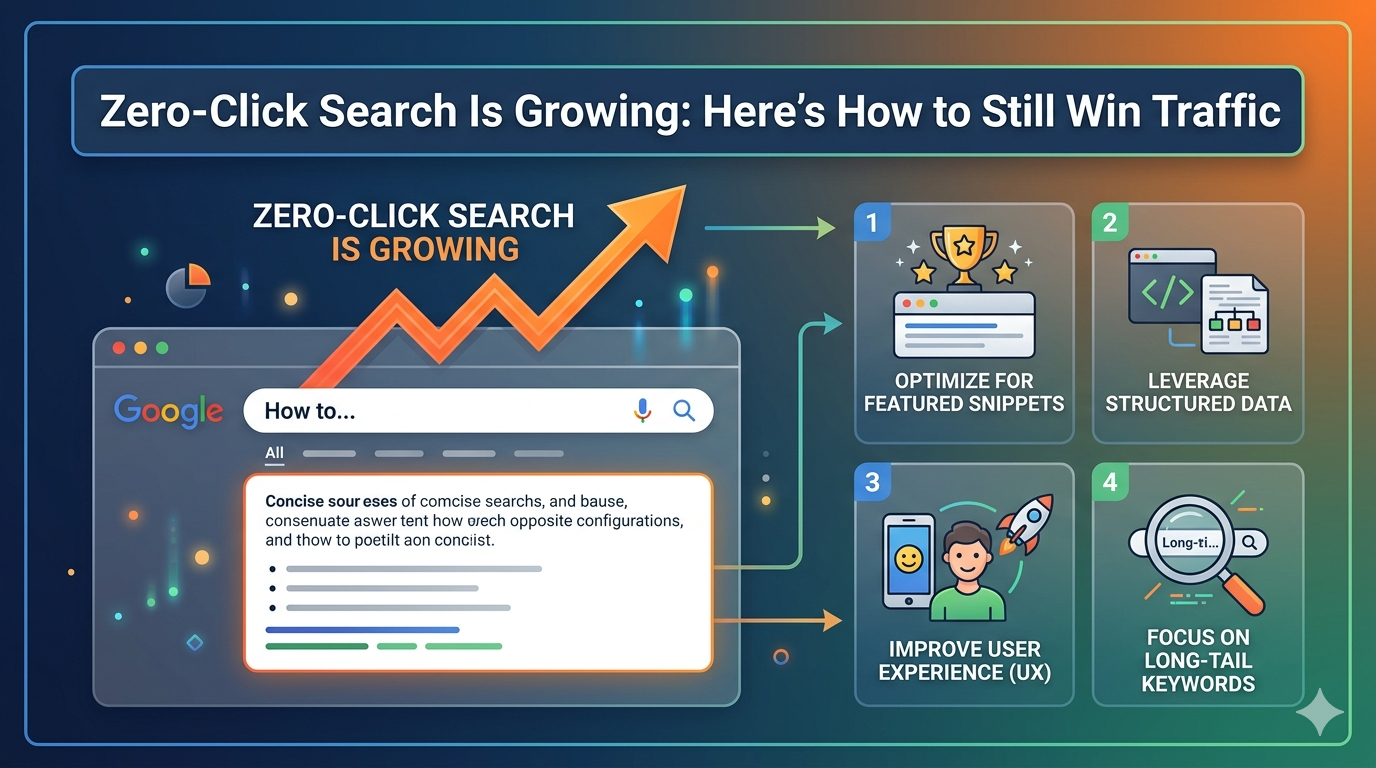
Third, optimize to be the source that gets cited. If zero-click is happening anyway, you want your brand name in that AI Overview. That means structuring your content with clear, concise answers in the first paragraph, using FAQ schema, and building the kind of topical authority that makes Google trust you as a source.
Fourth, build direct channels that don’t depend on Google at all. Email lists. LinkedIn following. YouTube subscribers. Communities. These are audiences you own. Every time someone visits your site, even from a zero-click-reduced search, give them a reason to join your email list or follow you somewhere. That way, you’re converting informational traffic into an owned audience, even if Google takes more of that traffic away over time.
Fifth, focus on long-tail, high-intent queries. Generic, short-tail informational queries are the ones most affected by zero-click. But specific, long-tail queries, especially ones with commercial intent still drive clicks because the user needs depth that an AI summary can’t provide.
Instead of targeting “what is content marketing,” target “content marketing strategy for B2B SaaS companies with long sales cycles.” The search volume is lower, but the intent is higher, the competition is lower, and zero-click is less of a factor.
The brands that panic about zero-click and retreat from SEO are making a mistake. The brands that adapt by diversifying what they measure, investing in content that requires clicks, and building owned audiences will come out stronger.
Zero-click isn’t the end of organic search. It’s the end of lazy organic search. And frankly, that’s not the worst thing.